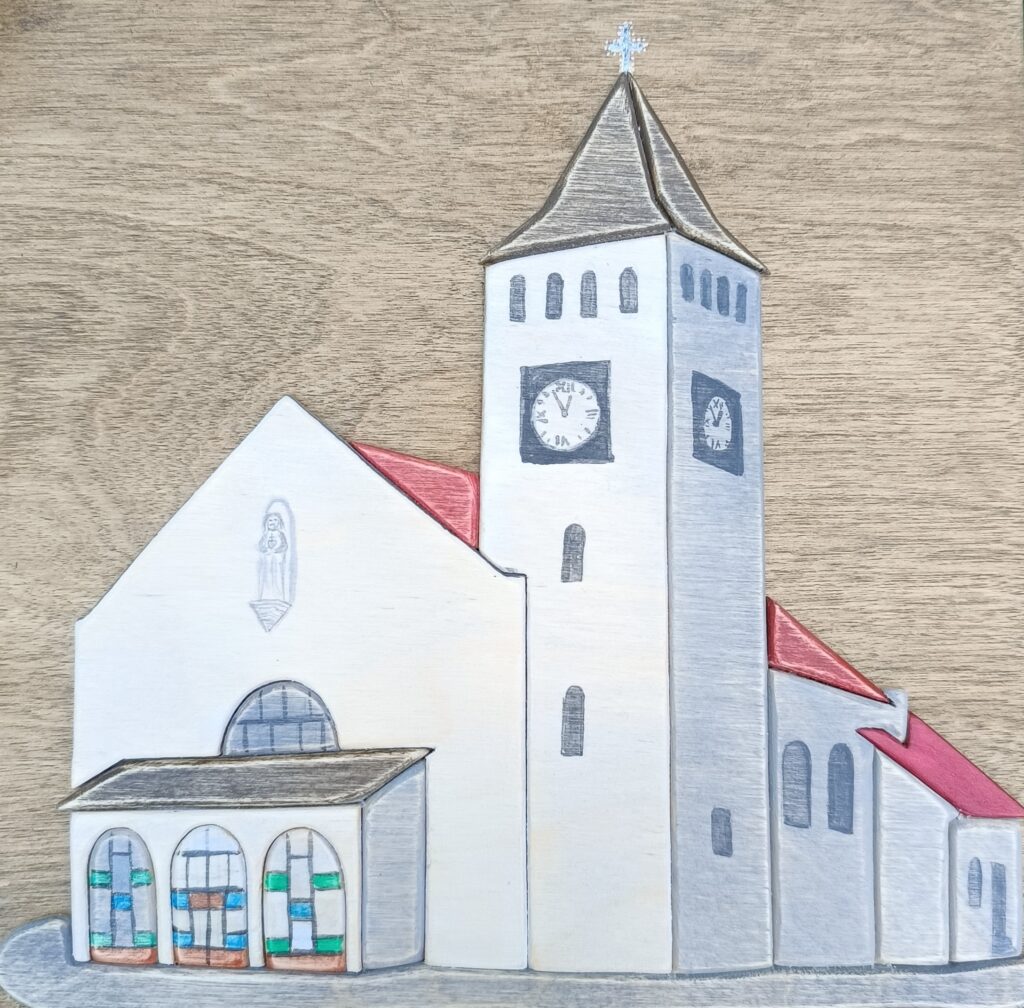
Like the Netherlands, the Hungarian Catholic Church is regulated by the Code of Canon Law, and since parishes do not have separate regulations, the Regulations of the Representative Body of Hungarian Parishes apply to them (attached).
According to Hungarian Act CCVI of 2011, in the event of dissolution, property issues are determined by the internal rules of the established church, the registered church, or the registered church.
„Act CCVI of 2011”
on the right to freedom of conscience and religion, and on the legal status of churches, religious denominations and religious communities *
Section 30 * (1) In the event of the termination of an established church, a registered church and a registered church without a legal successor, the internal ecclesiastical legal personality of the established church, a registered church and a registered church shall also terminate without a legal successor.
(2) In the event of the termination of an internal church legal entity, property issues shall be determined by the internal rules of the established church, the registered church, or the registered church .”
The law in Hungarian:
https://net.jogtar.hu/jogszabaly?docid=a1100206.tv
English translation of the law:
https://njt.hu/jogszabaly/en/2011-206-00-00
Internal rule: Canon law
CIC can. 515 § 3
Canon 515 – §1 A parish is a community of the Christian faithful established on a permanent basis within a particular Church, the pastoral care of which is entrusted, under the supervision of the diocesan bishop, to a parish priest who is its proper shepherd.
§ 2. The diocesan bishop alone has the right to establish, abolish or modify a parish; however, he may not establish, abolish or significantly modify a parish without consulting the clerical senate.
§ 3. A legally established parish has legal personality by virtue of the law itself.
CIC can. 123. – Upon the cessation of an official juridical person, the fate of its goods, property rights and obligations is determined by law and regulations; if these do not provide for the matter, they belong to the immediately superior juridical person, always respecting the will of the founders or donors and the acquired rights; if a private juridical person ceases to exist, its own regulations determine the fate of its goods and obligations.
Source: The Canon Law
in Hungarian: https://torvenykonyv.katolikus.hu/www.vatican.va/archive/cod-iuris-canonici/hu/documents/cic_konyvII_0515-0552_hu.html
in English: https://www.vatican.va/archive/cod-iuris-canonici/eng/documents/cic_lib2-cann460-572_en.html